


Digital Printing on Fabric: Process, Types, Benefits, and Uses
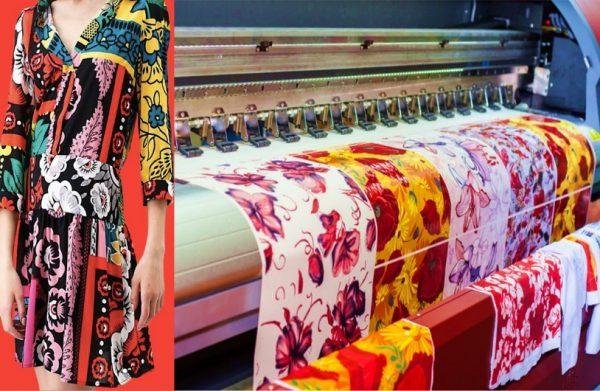
Digital printing on fabric is a textile decoration process that transfers a digital image directly onto fabric with specialized textile printing equipment. Instead of using physical screens, blocks, or engraved rollers, digital printers use computer-controlled print heads to place tiny droplets of ink on precise areas of the material. This makes it possible to reproduce detailed artwork, photographs, logos, gradients, and repeating patterns on textiles.
The use of Digital printing on fabric has expanded across fashion, home furnishings, sportswear, advertising, and customized products. One reason is its flexibility. A manufacturer can change a digital design without producing a new set of screens for every variation. This is especially useful for short production runs, product samples, personalized orders, and collections containing several different designs.
What Is Digital Textile Printing?
Digital textile printing combines digital artwork with inkjet printing technology designed specifically for fabric. The printer receives information from a computer file and converts it into instructions for the print heads. These print heads apply controlled amounts of textile ink as the fabric moves through the machine.
The process may appear simple, but print quality depends on several technical factors. Fabric composition, weave, surface texture, ink type, pretreatment, printing resolution, color management, and fixation all affect the finished textile.
For this reason, there is no universal digital printing process that works equally well on every fabric. Cotton, polyester, silk, wool, nylon, and blended materials require different approaches.
How Does Digital Printing on Fabric Work?
Preparing the Design
Production starts with a digital artwork file. The design can be a photograph, illustration, logo, painting, geometric pattern, or repeating textile motif.
Before printing, the artwork should be checked at its intended production size. Resolution is important because an image that looks sharp on a computer screen may become blurred or pixelated when enlarged.
Designers should also verify colors, dimensions, proportions, and pattern repeats. If a pattern is intended to cover a large roll of fabric, its repeat must connect accurately at every edge.
Selecting the Fabric
The fabric should be selected according to both its fiber content and final purpose. Polyester is commonly used with dye sublimation, while cotton and other cellulose-based textiles can be printed with reactive or suitable pigment systems.
Silk, wool, and some nylon materials are commonly associated with acid dye printing. Blended fabrics require careful testing because different fibers may respond differently to the same printing process.
Fabric weight, weave, absorbency, stretch, and surface texture can also affect the appearance of the finished print.
Pretreating the Fabric
Some digital textile printing technologies require pretreatment before printing. Pretreatment helps control ink absorption and can improve color development and image definition.
The quality of this stage matters. Uneven pretreatment may produce inconsistent shades, unwanted spreading, or differences in print sharpness.
The fabric should also be properly cleaned, dried, aligned, and tensioned before entering the printer.
Applying the Ink
During printing, the textile passes through the machine while print heads deposit ink according to the digital artwork. The printer controls the position and quantity of ink to construct the image.
Operators can adjust factors such as print speed, resolution, ink volume, and number of passes. A higher-quality mode can provide greater detail, although it may require more production time.
Fixing the Print
After printing, the ink generally needs to be fixed to the fabric. The method depends on the type of ink used.
Heat, steam, or controlled curing may be required. Some dye-based processes also involve washing after fixation to remove unfixed dye and processing residues. Drying and additional finishing follow when necessary.
Main Types of Digital Fabric Printing
Reactive Printing
Reactive printing is widely used for cotton, linen, viscose, and other cellulose-based fabrics. Reactive dyes form a chemical bond with suitable fibers during the fixation stage.
It can produce vibrant colors and good wash durability when the complete process is properly controlled. However, it normally involves pretreatment, printing, steaming, washing, and drying.
Pigment Printing
Pigment printing uses colored particles held on the fabric with a binder. It can be applied to various textile fibers.
One advantage is its versatility across different materials. Proper curing is essential because the binder must develop adequate resistance to washing and rubbing.
Dye Sublimation
Dye sublimation is primarily used for polyester and compatible synthetic fabrics. Heat transfers the dye into the polyester structure.
It is common in sportswear, flags, banners, promotional textiles, and soft signage. The process can produce detailed graphics and bright colors on suitable polyester materials.
Acid Printing
Acid dye printing is commonly used for silk, wool, and certain nylon fabrics. It is capable of producing rich colors and detailed designs.
This technology is useful for specialty textiles where color quality and the natural characteristics of the material are important.
Practical Benefits of Digital Printing on Fabric
Detailed Artwork
Digital printing can reproduce complex images containing many colors, fine lines, shadows, photographs, and smooth gradients. Designers have greater freedom because they do not need to prepare a separate physical screen for every color.
Short Production Runs
Digital printing can be practical for small quantities. A company can produce a limited amount of fabric, inspect the result, and make design changes before starting larger production.
This is valuable for new fashion collections, samples, limited editions, and customized products.
Personalization
Digital files can be changed quickly, allowing manufacturers to create individualized products. Names, numbers, photographs, logos, and other variable graphics can be incorporated into separate print jobs.
Sportswear, promotional products, personalized clothing, and event materials can benefit from this capability.
Faster Sampling
A physical sample can be produced without creating an extensive physical setup. Designers can evaluate the actual fabric, colors, pattern scale, and print quality before approving a larger order.
Design Flexibility
Changing from one design to another is generally straightforward in a digital workflow. This makes the process suitable for businesses that handle many designs and relatively small orders.
Applications of Digital Textile Printing
Fashion and Apparel
Digitally printed fabrics are used for dresses, shirts, skirts, jackets, scarves, sportswear, and accessories. Designers can create photographic prints and highly detailed patterns that would be more complicated to reproduce using some traditional techniques.
Home Textiles
Curtains, cushions, bedding, table linens, upholstery, and decorative fabrics can be produced with customized designs. Interior designers can develop patterns specifically for individual rooms and commercial spaces.
Advertising
Flags, banners, exhibition graphics, promotional backdrops, and branded textile displays are common applications. Digital printing makes it easier to produce graphics for different campaigns.
Creative and Small-Business Products
Independent artists and textile brands can print original artwork on fabric without necessarily ordering extremely large quantities. This supports limited collections and made-to-order products.
Common Challenges and Considerations
Color Accuracy
The colors seen on a monitor do not always match the finished textile. Screen calibration, fabric color, ink chemistry, printer settings, lighting, and finishing can all influence the result.
A physical proof is therefore useful when exact color reproduction matters.
Ink and Fabric Compatibility
Using the wrong ink system can cause bleeding, weak color, poor adhesion, or low durability. The fabric's fiber composition should be confirmed before selecting the printing technology.
Print Durability
The required durability depends on the product. Clothing may need to withstand repeated washing, while outdoor textiles may experience sunlight, moisture, and temperature changes.
Testing should reflect actual conditions of use.
Production Cost
Digital printing is not automatically cheaper than traditional textile printing. It can be attractive for short runs and customized work, while conventional methods may remain competitive for certain high-volume orders.
A realistic cost calculation should include fabric, ink, pretreatment, labor, energy, printing, fixation, washing, drying, finishing, and waste.
Key Tips for Better Printing Results
Start with high-quality artwork and check the file at its actual production size. Choose fabric according to the intended application and select an ink system designed for that fiber.
Always test unfamiliar fabric and ink combinations before bulk production. Examine the sample for color accuracy, sharpness, bleeding, shrinkage, fabric feel, and durability.
Maintain consistent fabric tension during printing. Poor alignment can distort patterns and reduce print quality.
For repeat orders, record successful settings for the printer, fabric, ink, pretreatment, and finishing process. Consistent records can make future production easier to reproduce.
Frequently Asked Questions
1. What is digital printing on fabric?
Digital printing on fabric is a process in which specialized textile printers apply digital artwork directly to fabric using compatible textile inks.
2. Which fabrics can be digitally printed?
Cotton, polyester, silk, nylon, linen, viscose, and many blended fabrics can be digitally printed. The appropriate ink and process depend on the fiber composition.
3. Can digital printing reproduce photographs?
Yes. Digital textile printing can reproduce photographs, gradients, fine lines, and complex artwork when the design, fabric, ink, and printer are properly matched.
4. Is digitally printed fabric washable?
Many digitally printed textiles can withstand washing when the correct ink, fixation, and finishing process are used. Care requirements vary according to the fabric and printing technology.
5. Is digital printing suitable for large orders?
It can be used for large-scale production, but cost effectiveness depends on the order size, equipment, design requirements, and production conditions. Traditional printing may be more economical for some very large runs.
Conclusion
Digital printing on fabric has become an important method for producing detailed, customized, and flexible textile designs. Its digital workflow makes it particularly useful for complex artwork, short runs, product sampling, personalized products, and collections with frequent design changes.
Good results depend on more than the printing machine. Fabric composition, ink selection, artwork quality, pretreatment, printer settings, color control, fixation, and finishing must all be considered. The intended use of the finished textile should guide these decisions.
For manufacturers and designers, testing is one of the most practical ways to reduce production problems. A properly printed sample can reveal issues with color, image sharpness, fabric behavior, and durability before a larger order is started. When the right printing method is matched with the appropriate fabric and carefully controlled production conditions, digital textile printing can deliver precise, attractive, and functional results across a wide range of applications.

 English
 Arabic
 French
 Spanish
 Portuguese
 Deutsch
 Turkish
 Dutch
Dutch
 Italiano
 Romaian
 Portuguese (Brazil)
 Greek
Greek