


When Should Hospitals Use UV Disinfection Technology?
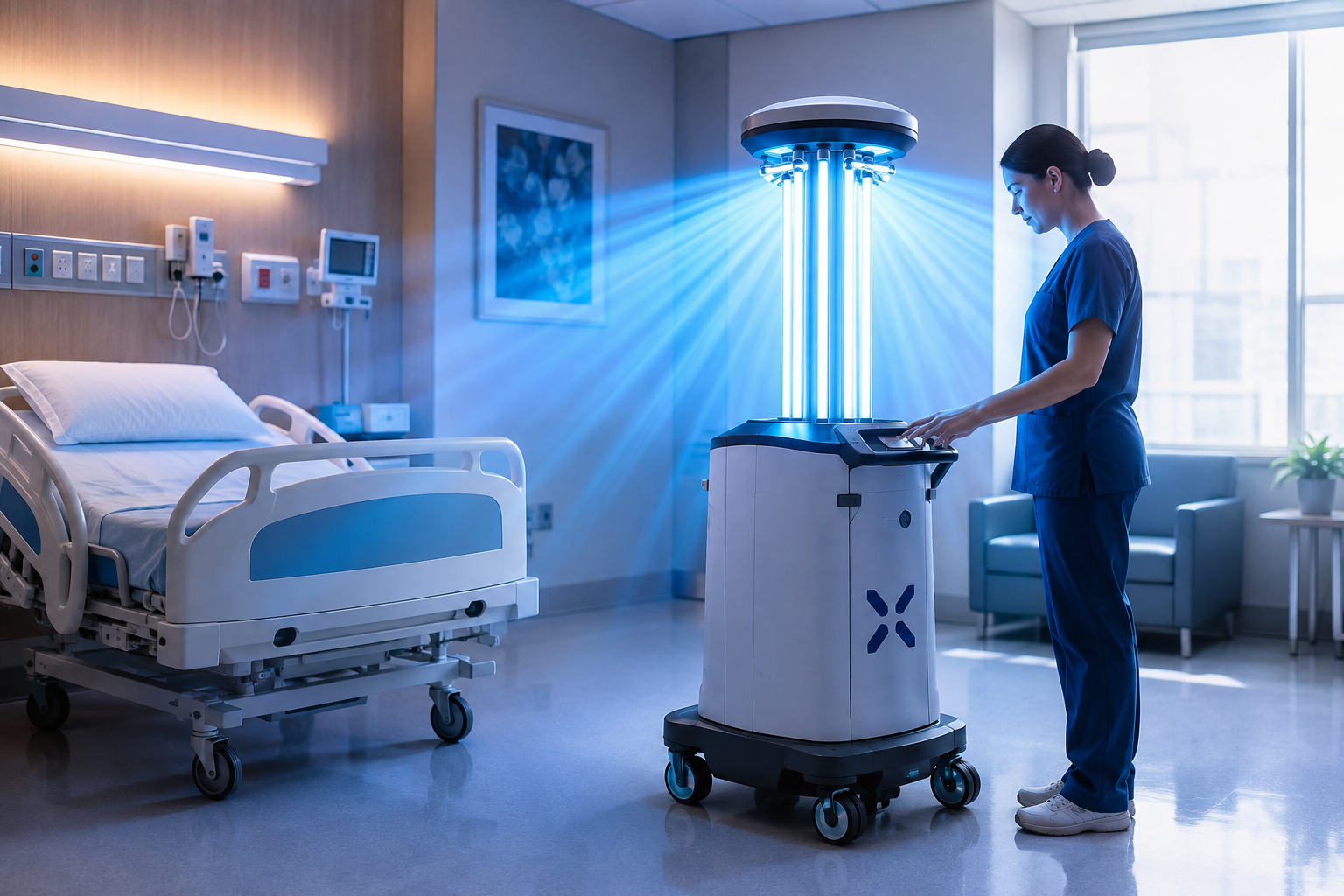
Hospitals work hard to maintain clean and safe environments, but traditional environmental cleaning may not remove every microorganism from every surface. That is where UV disinfection technology can provide an additional layer of protection. Facilities evaluating advanced options can explore UV disinfection technology for healthcare facilities as part of a broader environmental cleaning and infection prevention strategy. Xenex describes its approach as helping healthcare facilities reduce microbial load in rooms and areas through Pulsed Xenon UV technology and integrated workflow support.
But when should hospitals actually use UV disinfection? The answer depends on the facility's cleaning protocols, patient population, room type, infection prevention goals, and operational needs.
What Is UV Disinfection Technology?
UV disinfection uses ultraviolet light to reduce microorganisms on exposed environmental surfaces. In healthcare, UV technology can be used as an adjunct to manual cleaning and disinfection, rather than as a replacement for established cleaning procedures.
Xenex's LightStrike technology uses high-intensity, broad-spectrum Pulsed Xenon UV light. Its LightStrike+ device is described by Xenex as an FDA-authorized medical device designed for whole-room microbial reduction, with customizable positioning, motion sensors, and cloud-based reporting.
This approach is particularly relevant when hospitals want to address pathogens that may remain after routine environmental cleaning.
1. After Manual Cleaning Is Complete
One of the most important situations for using UV disinfection is after a room has been manually cleaned and disinfected.
Healthcare environmental services teams follow established cleaning protocols, but some surfaces can be difficult to clean consistently. Missed areas, equipment positioning, room complexity, and human variability can all affect environmental cleaning.
Xenex specifically describes LightStrike as an additional step following CDC manual disinfection guidelines, helping deactivate remaining pathogens after traditional cleaning.
Using UV technology this way creates a layered approach:
Manual cleaning → UV microbial reduction → room ready for the next appropriate use
2. When Hospitals Want an Additional Infection Prevention Layer
Hospitals continually work to reduce the risk of healthcare-associated infections (HAIs). Environmental surfaces can play a role in pathogen transmission, making environmental cleaning an important component of infection prevention programs.
UV disinfection can support an existing infection control bundle by adding an automated, no-touch microbial reduction step.
Xenex reports research involving pathogens such as C. difficile, MRSA, VRE, A. baumannii, and other microorganisms. Its published studies page also lists laboratory, environmental, and hospital-use studies involving multiple pathogens and healthcare settings.
Hospitals should therefore consider UV disinfection when their infection prevention teams are looking for evidence-based ways to strengthen environmental hygiene practices.
3. In High-Risk Patient Care Areas
Certain areas of a hospital require particularly careful environmental disinfection because of the patients or procedures involved.
Examples may include:
-
Intensive care units
-
Surgical suites
-
Patient rooms
-
Isolation areas
-
High-acuity treatment areas
-
Rooms occupied by patients with certain infectious conditions
The appropriate use of UV technology should always be determined according to the hospital's infection prevention policies, room requirements, and device instructions.
Xenex's LightStrike products are designed for customizable room types and positions, making workflow planning an important part of implementation.
4. When C. difficile and Other Resistant Pathogens Are a Concern
Some healthcare pathogens are particularly challenging from an environmental cleaning perspective.
Clostridioides difficile (C. difficile), MRSA, VRE, and multidrug-resistant organisms can create significant infection-control concerns. Hospitals dealing with recurring contamination or outbreaks may evaluate supplemental disinfection technologies as part of a comprehensive response.
Xenex highlights C. difficile and MRSA among the organisms studied with its technology, while its LightStrike6 studies page lists multiple peer-reviewed investigations involving healthcare environments and pathogens.
UV disinfection should not be viewed as a standalone solution. Instead, it can complement hand hygiene, appropriate PPE, environmental cleaning, isolation precautions, antimicrobial stewardship, and other infection prevention measures.
5. When Hospitals Need Faster Room Turnover
Hospital efficiency is another reason facilities may evaluate automated disinfection.
After a patient is discharged or transferred, environmental services teams need to clean the room before it can be occupied again. Hospitals must balance thorough cleaning with the need to make rooms available promptly.
Xenex states that its approach includes training and workflow consulting intended to help facilities speed room turnover and improve throughput. The company also reports that some LightStrike cycles can be completed in minutes, depending on the organism and application.
The actual cycle time depends on the room, device, positioning, target organisms, and protocol, so hospitals should evaluate performance within their own workflows.
6. When Hospitals Need Better Disinfection Data
Modern infection prevention programs increasingly rely on measurable processes.
Hospitals may want to know:
-
When was a room disinfected?
-
Was the UV cycle completed?
-
How frequently is the technology being used?
-
Are environmental services teams following the intended workflow?
-
Where can the process be improved?
Xenex's LightStrike products include cloud-based reporting capabilities for key metrics. This can help healthcare organizations incorporate utilization information into quality and operational discussions.
7. When Hospitals Want to Standardize an Enhanced Cleaning Program
UV disinfection technology can be most useful when it is treated as part of a program, not simply as a piece of equipment.
Hospitals should establish:
-
Which rooms receive UV treatment
-
When treatment occurs
-
Who operates the device
-
How manual cleaning is completed first
-
How staff are trained
-
How results and utilization are monitored
-
How the process fits existing infection prevention policies
Xenex also offers service and support programs that include training, workflow consulting, reporting, and technical support.
Is UV Disinfection a Replacement for Manual Cleaning?
Generally, hospitals should not treat UV technology as a replacement for routine manual cleaning.
Surface cleaning remains an essential part of environmental hygiene. UV technology can instead provide an additional microbial reduction step after appropriate cleaning.
The goal is to create a more comprehensive environmental disinfection process rather than eliminate fundamental cleaning practices.
Why Should Hospitals Consider UV Disinfection?
Hospitals may consider UV disinfection technology when they want to:
-
Add another layer to infection prevention
-
Reduce microbial contamination after manual cleaning
-
Support environmental services teams
-
Address challenging healthcare pathogens
-
Improve room turnover workflows
-
Track disinfection activity
-
Strengthen an evidence-based cleaning program
Xenex's product portfolio includes LightStrike+ and LightStrike6 for room and space disinfection, along with Deactivate, a handheld LED unit, and TrackMate, a digital tracking system.
Final Thoughts
So, when should hospitals use UV disinfection technology? The strongest use case is when a healthcare facility wants to add automated, no-touch microbial reduction to an established environmental cleaning and infection prevention program.
For hospitals considering this technology, the decision should be based on clinical needs, room types, workflow requirements, pathogen risks, staff training, safety procedures, and available evidence. When appropriately integrated, UV disinfection can serve as a useful additional layer between routine environmental cleaning and the next patient occupying the space.
FAQs
1. Can UV disinfection replace hospital cleaning?
No. UV disinfection should generally be considered an additional step within an environmental cleaning program, not a replacement for appropriate manual cleaning and disinfection.
2. When should a hospital use a UV disinfection robot?
A hospital may use a UV robot after manual cleaning when its infection prevention program calls for supplemental whole-room microbial reduction.
3. What pathogens can UV disinfection target?
Xenex reports research involving pathogens including C. difficile, MRSA, VRE, A. baumannii, and others. Results depend on the organism, surface, exposure, device, and protocol.
4. Can UV disinfection help hospitals improve room turnover?
It can be incorporated into room-turnover workflows. Xenex provides workflow consulting and reports that its systems can perform certain cycles in minutes.
5. Is UV disinfection safe for hospital staff?
UV disinfection equipment must be operated according to the manufacturer's safety instructions. Xenex's LightStrike devices include motion-detection safety features that stop the device when motion is detected.

 English
 Arabic
 French
 Spanish
 Portuguese
 Deutsch
 Dutch
Dutch
 Italiano
 Russian
 Romaian
 Portuguese (Brazil)
 Greek
Greek
