


UK Payroll Outsourcing Services: Accurate, Secure & Compliant
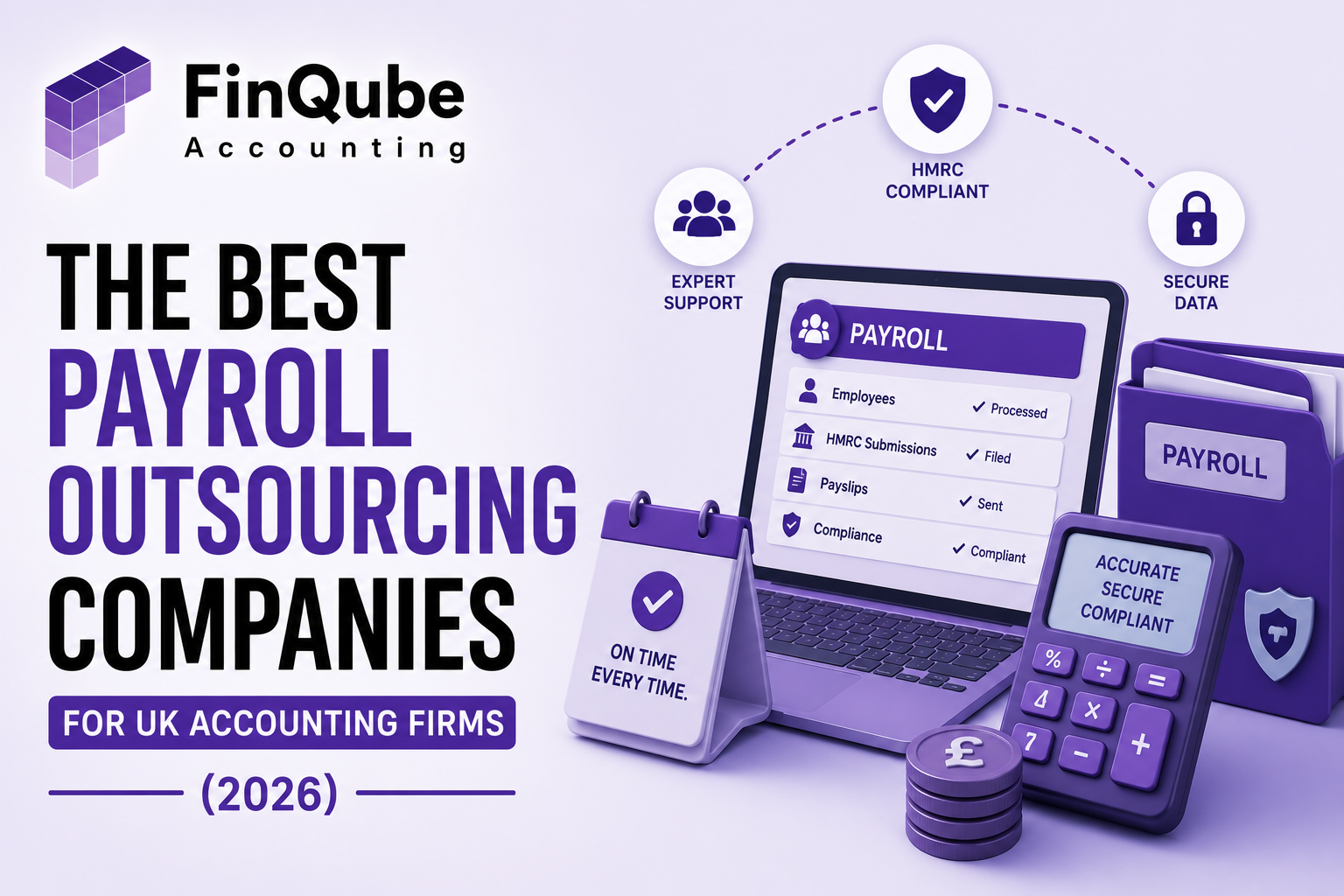
For many UK businesses, payday is more than a date on the calendar. It is a moment when employees expect everything to work perfectly. Salaries need to arrive on time, deductions need to be accurate, pension contributions need to be handled correctly, and payroll information needs to reach HMRC as required.
As businesses grow, however, payroll can become increasingly difficult to manage internally. New employees, changing tax codes, overtime, bonuses, statutory payments, pensions, benefits, leavers, and changing payroll requirements can quickly turn a simple monthly process into a demanding administrative responsibility.
This is where Payroll Outsourcing Services can make a significant difference.
By working with experienced payroll specialists, businesses can introduce structured processes, reduce administrative pressure, improve consistency, and gain greater confidence in their payroll operations. The right outsourcing arrangement does not simply take payroll work away from an internal team. It creates a more controlled and dependable payroll process.
What Are Payroll Outsourcing Services?
Payroll Outsourcing Services involve transferring some or all payroll administration and processing activities to an external specialist.
Depending on the provider and agreement, outsourced payroll support can include employee data management, payroll calculations, payslip preparation, payroll reporting, PAYE administration, pension information, statutory payments, starter and leaver processing, and support with payroll queries.
HMRC confirms that employers can choose to use a payroll provider rather than running payroll themselves. However, outsourcing does not automatically transfer the employer's legal responsibility for PAYE compliance.
This distinction is important. A reliable outsourcing relationship should therefore be based on clear responsibilities, documented procedures, accurate information, and appropriate oversight.
Why UK Businesses Are Outsourcing Payroll
Payroll has traditionally been handled internally by finance or HR teams. For smaller businesses, this may initially be practical. One person may be able to manage payroll alongside bookkeeping, accounts payable, reporting, and other finance duties.
As the organisation grows, the situation changes.
Payroll becomes more time-consuming, employee queries increase, and the consequences of a mistake become more serious. A business may also become dependent on one employee who understands the entire payroll process.
This creates operational risk.
UK payroll outsourcing provides businesses with access to specialist support without necessarily building a larger internal payroll department. Instead of asking existing employees to manage every payroll responsibility, companies can establish a dedicated workflow supported by external expertise.
The Growing Complexity of UK Payroll
Payroll is not simply a matter of calculating salaries.
A modern payroll operation may involve:
- PAYE calculations
- National Insurance contributions
- Employee tax codes
- Pension deductions
- Auto-enrolment requirements
- Statutory Sick Pay
- Statutory Maternity Pay
- Statutory Paternity Pay
- Student loan deductions
- Overtime and bonuses
- Expenses and benefits
- New starters
- Employee leavers
- Payslips and payroll records
- RTI reporting
- Year-end payroll requirements
HMRC states that payroll software can help businesses record employee details, calculate pay and deductions, report payroll information, calculate amounts payable to HMRC, and calculate statutory payments.
The challenge for many businesses is not having access to software. It is having the time, knowledge, processes, and internal controls required to use it correctly.
How Payroll Outsourcing Improves Accuracy
Payroll accuracy directly affects employee confidence.
An employee who receives an incorrect salary may immediately begin questioning the reliability of the company. Even a small error can require additional calculations, explanations, corrections, and communication.
Professional payroll processing services can introduce structured checks before payroll is finalised.
A strong process may include:
- Collecting payroll information.
- Checking employee changes.
- Reviewing timesheets and leave information.
- Checking starters and leavers.
- Reviewing unusual payroll movements.
- Calculating gross-to-net pay.
- Reviewing deductions.
- Preparing payroll reports.
- Obtaining approval.
- Completing the agreed payroll process.
This approach reduces reliance on memory and makes payroll more repeatable.
Payroll Compliance and HMRC Responsibilities
Compliance is one of the biggest reasons businesses consider payroll compliance services.
UK employers have responsibilities relating to PAYE, employee deductions, payroll records, reporting, and statutory payments. Payroll information must be handled carefully because errors can create financial and administrative consequences.
Real Time Information is particularly important. Payroll information is generally reported to HMRC when employees are paid, with Full Payment Submissions providing details including payments and deductions.
Outsourcing can help businesses establish a clear process for preparing payroll information and managing reporting requirements.
However, businesses should remember that using a payroll provider does not remove their overall legal responsibility. HMRC specifically states that employers remain responsible for PAYE tasks even when another organisation operates their payroll.
Supporting SMEs With Scalable Payroll Solutions
Small and medium-sized businesses often experience payroll pressure differently from large organisations.
An SME may have one finance manager responsible for bookkeeping, cash flow, accounts, tax preparation, management reporting, and payroll. As employee numbers increase, payroll can consume an increasing amount of their working time.
This is where payroll solutions for SMEs become particularly valuable.
Outsourcing enables the business to access specialist payroll capacity without necessarily hiring a dedicated internal payroll team.
It can also provide scalability.
A payroll process designed for ten employees may become inefficient when the organisation reaches fifty or one hundred employees. Outsourced managed payroll services can provide additional capacity as the workforce changes.
The Role of Payroll Technology
Technology has transformed payroll administration.
Modern payroll platforms can automate calculations, generate payslips, maintain employee information, support reporting, and assist with statutory requirements. HMRC maintains a list of recognised payroll software that businesses can use for online PAYE reporting.
However, technology alone does not guarantee accurate payroll.
The quality of the information entered into the system remains important. If an employee's salary change is missed, an incorrect tax code is used, or a leaver is not processed correctly, the software may simply process incorrect information efficiently.
That is why successful outsourced payroll services combine technology with human oversight and structured controls.
What Should a Reliable Payroll Provider Offer?
Choosing a provider should involve more than comparing prices.
Businesses should examine how the provider manages the complete payroll workflow.
A reliable payroll provider UK businesses can depend on should provide:
Clear Payroll Processes
There should be defined deadlines for submitting payroll information, reviewing calculations, approving payroll, and completing the payroll cycle.
Accurate Payroll Processing
The provider should have appropriate procedures for checking salaries, deductions, tax information, pensions, overtime, and other payroll variables.
Transparent Communication
Businesses should know who to contact when a payroll question arises. Communication should not depend on finding the right person at the last minute.
Secure Data Handling
Payroll contains sensitive employee information. Providers should have appropriate procedures for protecting payroll data and controlling access.
Scalable Support
The provider should be capable of supporting the business as employee numbers and payroll requirements increase.
Practical Reporting
Management should receive useful payroll information rather than simply receiving a final payroll figure.
Payroll Security Should Never Be Overlooked
Payroll information is highly sensitive.
It may include employee addresses, bank details, salaries, tax information, National Insurance details, pension information, and other personal data.
Businesses considering secure payroll outsourcing should therefore ask how payroll information is transferred, who has access to it, how permissions are managed, and what procedures exist for handling sensitive information.
Security should also extend to people and processes.
Access should be limited to authorised individuals. Payroll information should not be casually shared through unsecured channels. Changes to employee records should follow defined procedures.
A reliable outsourcing provider should understand that payroll security is part of operational responsibility, not simply an IT concern.
Payroll Support for Starters and Leavers
Employee movement is one of the areas where payroll teams can become stretched.
New starters need to be added correctly, while leavers require accurate final payments and appropriate documentation. Salary changes, working-hour changes, and other employee amendments also need to reach payroll before the relevant deadline.
A structured payroll support services model can help businesses create a consistent process for these changes.
Instead of relying on scattered emails, an organisation can establish a standard procedure covering the information required, approval responsibilities, deadlines, and payroll treatment.
This reduces the chance of important information being overlooked.
Managing Payroll Queries More Effectively
Payroll does not end when employees receive their salaries.
Employees may have questions about tax deductions, pension contributions, overtime, bonuses, holiday pay, or changes in their net salary.
When payroll is managed internally by an already-busy finance employee, these questions can interrupt other important work.
Professional payroll management services can introduce a defined approach to payroll queries.
Routine questions can be handled through established procedures, while unusual or sensitive matters can be escalated to the appropriate person.
This creates a better experience for employees while reducing unnecessary pressure on internal teams.
Why Payroll Outsourcing Can Save Time
The financial value of outsourcing is not always limited to the payroll fee.
Businesses should also consider the internal time spent:
- Collecting employee information
- Chasing missing timesheets
- Checking payroll calculations
- Correcting mistakes
- Preparing reports
- Responding to payroll queries
- Managing pension information
- Preparing payroll submissions
- Monitoring deadlines
- Maintaining payroll records
When these activities are handled by a specialist team, internal employees can dedicate more time to strategic finance and business operations.
This is particularly valuable for growing companies where finance teams need to focus on cash flow, profitability, forecasting, and decision-making.
When Should a Business Consider Outsourcing Payroll?
There is no universal employee number at which payroll outsourcing becomes necessary.
Instead, businesses should look at the complexity and reliability of their current process.
Outsourcing may be worth considering when:
- Payroll takes too much internal time.
- Payroll errors are becoming more frequent.
- The business is rapidly hiring.
- Payroll depends heavily on one employee.
- Employee queries are increasing.
- Compliance requirements feel difficult to manage.
- Finance teams are spending too much time on administration.
- The organisation wants a more scalable payroll process.
- Management wants stronger payroll controls.
- The company is expanding into new working arrangements.
The decision should ultimately be based on whether the current payroll model remains sustainable.
How to Choose the Right Payroll Outsourcing Partner
The right provider should feel like an extension of the business rather than another administrative layer.
Before selecting a provider, ask important questions about experience, processes, technology, communication, security, reporting, and responsibilities.
Businesses should also understand exactly what is included in the service.
For example, does the provider process payroll only, or does it also support employee records, payslips, pension information, reporting, and payroll queries?
HMRC advises businesses using payroll providers to understand the level of support they need and what information the provider requires.
It is also sensible to carry out appropriate checks on a payroll supplier. HMRC recommends employers understand the service being provided and, where relevant, check evidence relating to RTI returns and payments to HMRC.
The Importance of a Structured Payroll Calendar
A dependable payroll process begins with timing.
Every payroll cycle should have a clear calendar.
For example:
Payroll Cut-Off: Employee changes and variable pay information submitted.
Data Review: Payroll information checked for missing or unusual entries.
Processing: Payroll calculations completed.
Quality Check: Results reviewed before approval.
Approval: Authorised person confirms payroll.
Payroll Completion: Employees receive pay and relevant reporting is completed.
Post-Payroll Review: Payroll is reconciled and outstanding issues are recorded.
This simple structure can transform payroll from a stressful recurring task into a controlled business process.
Payroll Outsourcing and Business Growth
Growth creates opportunities, but it also exposes weaknesses in business processes.
A company may begin with a small team and informal payroll arrangements. As employee numbers increase, those informal systems become harder to maintain.
UK payroll outsourcing can provide the infrastructure needed to support growth without adding unnecessary administrative complexity.
A scalable payroll process allows businesses to concentrate on recruitment, customer relationships, sales, operations, and strategic planning while specialist support handles recurring payroll responsibilities.
The objective is not to outsource simply because the business is growing. It is to build systems that can grow with the business.
Eco Outsourcing and Managed Payroll Support
Eco Outsourcing provides managed payroll support designed around structured workflows, UK-focused payroll processes, and operational control.
Its current payroll positioning focuses on reducing reactive payroll processing, standardising inputs, validating information, managing approvals, and supporting employee payroll queries. The company states that its workflow can adapt to payroll platforms such as BrightPay, Sage Payroll, Xero Payroll, and other systems depending on the client's setup and permissions.
This approach is particularly relevant for businesses that want to reduce manual payroll administration without losing visibility over their payroll process.
The emphasis is on creating a predictable workflow where information is collected, checked, processed, and reviewed consistently.
Final Thoughts
Payroll is one of those business functions that often receives attention only when something goes wrong. Yet every successful payroll cycle contributes to employee confidence, financial control, and operational stability.
For growing UK businesses, Payroll Outsourcing Services can provide specialist support, structured processes, improved efficiency, and greater consistency.
The right provider should not simply process figures. It should help create a reliable payroll workflow supported by clear responsibilities, appropriate checks, secure information handling, accurate reporting, and responsive communication.
Eco Outsourcing offers a managed approach for businesses seeking dependable UK payroll services and structured payroll support services. By reducing repetitive administration and introducing controlled processes, businesses can spend less time dealing with payroll pressure and more time focusing on sustainable growth.
A dependable payroll operation may work quietly behind the scenes, but its value is felt throughout the organisation. When employees are paid accurately, deadlines are managed, information is controlled, and finance teams have greater capacity, the entire business becomes more resilient.
For UK businesses planning their next stage of growth, payroll should not be an afterthought. It should be a well-managed foundation for a stronger, more efficient operation.
 Dutch
Dutch
 English
 Arabic
 French
 Spanish
 Portuguese
 Deutsch
 Turkish
 Italiano
 Russian
 Romaian
 Portuguese (Brazil)
 Greek
Greek