


How Do You Know If You Have a Vision Loss Drug Injury Claim?
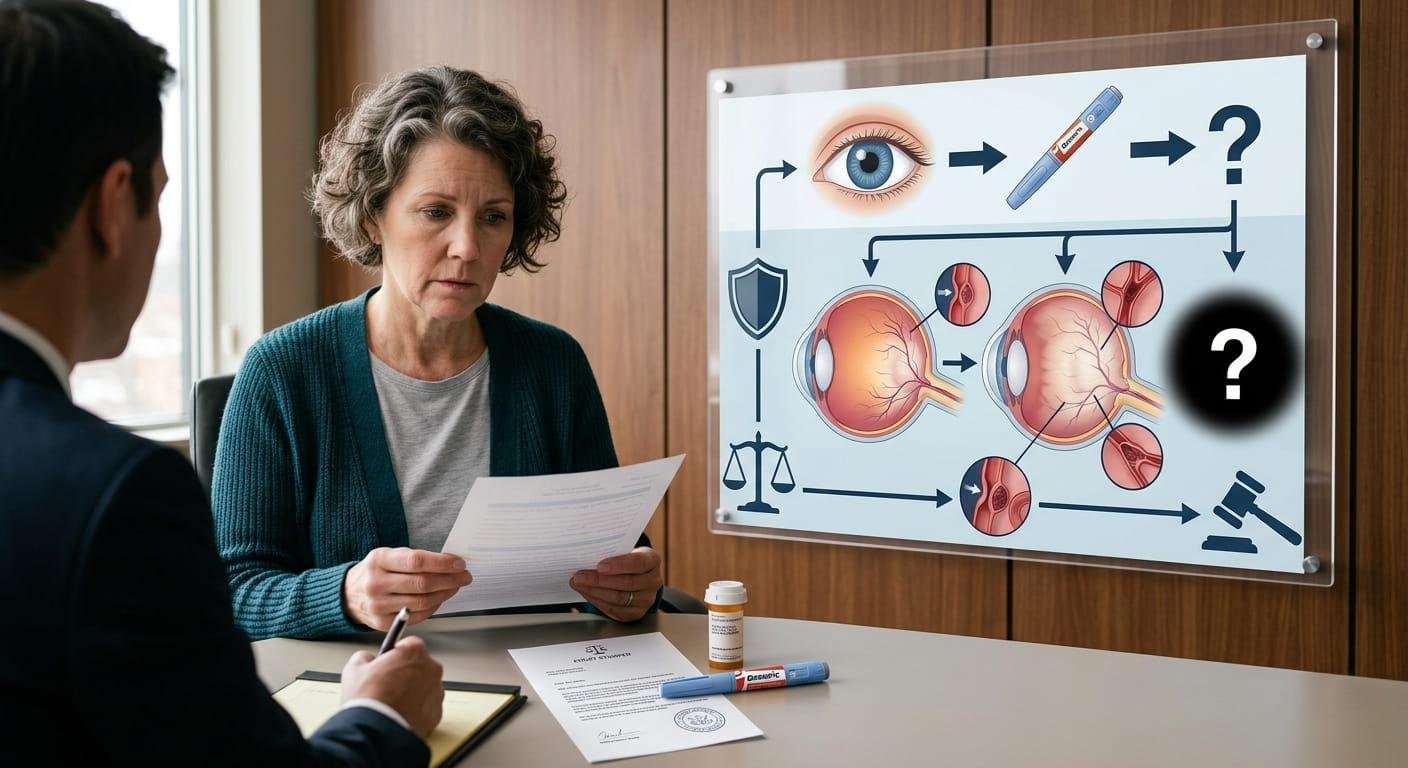
If you experienced sudden or serious vision problems after taking a medication, you may be asking, “How do you know if you have a vision loss drug injury claim?” A medication-related vision injury can involve complicated medical and legal questions, particularly when conditions such as nonarteritic anterior ischemic optic neuropathy (NAION) are involved. If you believe a medication contributed to your vision loss, Vision Loss Lawyer provides information about potential pharmaceutical injury claims and legal options.
What Is a Vision Loss Drug Injury Claim?
A vision loss drug injury claim is a potential legal claim involving a person who suffered a serious eye injury or vision impairment allegedly associated with a medication.
These cases can involve questions about whether:
-
The person took the medication as prescribed.
-
A serious eye condition developed after medication exposure.
-
The medication may have contributed to the injury.
-
The drug manufacturer had adequate information about potential risks.
-
The person suffered measurable physical, financial, or quality-of-life damages.
A vision problem occurring after taking a medication does not automatically mean the medication caused the injury or that a lawsuit will be successful. Medical and legal professionals generally need to evaluate the individual circumstances and available evidence.
What Types of Vision Problems May Be Involved?
Vision Loss Lawyer focuses on medication-induced vision loss and serious eye problems, including concerns involving NAION. The website describes NAION as a condition that can cause sudden, painless vision loss and potentially irreversible visual impairment.
Potential symptoms may include:
-
Sudden vision loss in one eye
-
Vision loss in both eyes
-
Blurred or reduced vision
-
A dark area or shadow in the visual field
-
Difficulty seeing colors
-
Difficulty seeing details clearly
Other medical conditions can cause similar symptoms, so receiving an appropriate diagnosis is important.
Could Semaglutide or Ozempic Be Involved?
One important area of current pharmaceutical injury research concerns semaglutide, the active ingredient in medications such as Ozempic and Wegovy.
The FDA has identified NAION as a potential serious-risk signal associated with semaglutide-containing products, including Ozempic, Wegovy, and Rybelsus, and has stated that it was evaluating whether regulatory action was needed.
Separately, the current FDA prescribing information for Ozempic warns patients to contact their healthcare provider if they experience changes in vision and includes information about diabetic retinopathy complications.
These facts do not establish that Ozempic or semaglutide caused every case of vision loss. A potential legal claim requires an assessment of the specific medical history and circumstances.
1. Did Your Vision Problems Begin After Taking the Medication?
The timing of your medication use and vision injury can be an important part of your medical history.
For example, you may want to document:
-
When you first started the medication
-
Your prescribed dosage
-
Any dosage changes
-
When your vision symptoms first appeared
-
Whether symptoms developed suddenly or gradually
-
Which eye was affected
-
Whether you experienced additional symptoms
A clear timeline does not by itself prove causation, but it can give doctors and attorneys important information to investigate.
2. Do You Have a Medical Diagnosis?
A formal diagnosis can be particularly important in evaluating a potential drug injury claim.
If you experienced sudden vision loss, your healthcare provider may investigate possible causes such as:
-
NAION
-
Diabetic retinopathy
-
Retinal disorders
-
Optic nerve disorders
-
Retinal vascular conditions
-
Other neurological or ophthalmic conditions
For example, the FDA's Ozempic labeling states that diabetic retinopathy complications occurred more frequently in certain clinical-trial participants receiving Ozempic than those receiving placebo, particularly among patients with a history of diabetic retinopathy.
Because vision loss can have many causes, establishing an accurate diagnosis is essential.
3. Do You Have Medical Records Connecting the Timeline?
Medical records can help establish what happened before, during, and after your vision injury.
Useful documents may include:
-
Prescription records
-
Pharmacy records
-
Medication lists
-
Ophthalmology records
-
Visual field test results
-
OCT or retinal imaging
-
Hospital records
-
Specialist evaluations
-
Diagnosis reports
-
Treatment records
These documents can help an attorney understand the nature of your injury and determine whether additional investigation may be appropriate.
4. Have You Experienced Financial Losses?
Serious vision impairment can create significant financial consequences.
Depending on the severity of the injury, you may have incurred:
Medical Expenses
You may have paid for emergency care, eye examinations, specialist appointments, diagnostic testing, medication, rehabilitation, or other treatment.
Lost Income
Vision impairment can make it difficult to work or may require time away from employment.
Reduced Earning Capacity
In more serious cases, a person may be unable to perform the same job or may need to transition to different work.
Keeping invoices, medical bills, pay records, and employment documentation can help demonstrate these losses.
5. Has Vision Loss Affected Your Quality of Life?
The consequences of vision loss are not always financial.
A serious visual impairment may affect:
-
Driving
-
Reading
-
Working
-
Using electronic devices
-
Household activities
-
Hobbies
-
Mobility
-
Independence
-
Social activities
Vision Loss Lawyer notes that potential pharmaceutical injury damages may include medical expenses, ongoing treatment costs, lost income, diminished earning capacity, pain and suffering, and loss of quality of life.
The specific damages available will depend on the facts of the claim and applicable law.
6. Have You Preserved Evidence About the Medication?
If you believe a medication caused or contributed to your injury, preserve information about the medication rather than relying on memory.
Keep records showing:
-
Medication name
-
Prescription information
-
Dosage
-
Pharmacy
-
Dates of use
-
Manufacturer information when available
-
Medication packaging or labels, if available
-
Medical records documenting the prescription
For compounded semaglutide, additional documentation may be especially useful because the FDA has warned about dosing errors and differences in concentrations among compounded products.
7. Have You Spoken With a Pharmaceutical Injury Lawyer?
If you have experienced significant vision loss after using a medication, speaking with an attorney may help you understand whether your circumstances could support a claim.
A pharmaceutical injury lawyer may review your:
-
Medication history
-
Medical diagnosis
-
Vision-loss timeline
-
Medical records
-
Potential alternative causes
-
Financial losses
-
Employment impact
-
Quality-of-life changes
The attorney can then explain whether further investigation may be appropriate.
What Evidence Can Support a Vision Loss Drug Injury Claim?
No single document automatically proves a pharmaceutical injury claim. Instead, an attorney may evaluate multiple pieces of evidence together.
Important evidence can include:
-
Prescription and pharmacy records
-
Medical and ophthalmology records
-
Diagnostic test results
-
Medication timeline
-
NAION or other vision-loss diagnosis
-
Medical bills and treatment expenses
-
Employment and income records
-
Documentation of daily-life limitations
The stronger and more complete the documentation, the easier it may be for a legal professional to understand the circumstances surrounding the injury.
What Should You Do If You Think You Have a Claim?
If you believe your vision loss may be medication-related, start by getting appropriate medical care. Sudden vision loss can require urgent evaluation and should not be ignored.
Next, preserve your medical and medication records. Write down when your symptoms started and how they affected your daily life.
Finally, consider discussing the situation with an attorney experienced in pharmaceutical litigation. Avoid assuming that a diagnosis automatically guarantees compensation; instead, allow a qualified legal professional to evaluate the facts of your individual situation.
Final Thoughts
So, how do you know if you have a vision loss drug injury claim? There is no single test that answers the question. A potential claim may involve several important factors, including medication exposure, the timing of your symptoms, a medical diagnosis, available medical evidence, and the physical, financial, and personal effects of your vision loss.
For people taking semaglutide medications such as Ozempic or Wegovy, NAION has received regulatory and scientific attention as a potential safety concern. The FDA has listed NAION among potential serious-risk signals for semaglutide-containing products, while current Ozempic labeling also advises patients to report vision changes.
If you have experienced serious vision loss after taking a medication, seek appropriate medical attention, preserve your records, and consider speaking with a qualified pharmaceutical injury attorney about your circumstances.
FAQs
1. What is a vision loss drug injury claim?
It is a potential legal claim involving serious vision loss or another eye injury allegedly associated with a medication. The facts, medical evidence, and applicable law determine whether an individual may have a viable claim.
2. Can I file a claim if I developed NAION after taking semaglutide?
Possibly. A NAION diagnosis alone does not establish legal causation. An attorney may need to review your medication history, medical records, timing, diagnosis, and other potential causes of the injury.
3. What evidence do I need for a medication-related vision loss claim?
Potentially useful evidence includes prescription records, pharmacy information, medical records, ophthalmology reports, diagnostic tests, medication timelines, medical bills, employment records, and documentation showing how vision loss affects your daily life.
4. Can Ozempic be associated with vision problems?
The FDA's current Ozempic information includes a warning to report vision changes and discusses diabetic retinopathy complications. The FDA has also identified NAION as a potential serious-risk signal associated with semaglutide-containing products.
5. Should I contact a lawyer after experiencing medication-related vision loss?
If you have suffered serious vision loss and believe a medication may have contributed, consulting a pharmaceutical injury attorney can help you understand whether your circumstances may support a legal claim. An attorney can review the medical and factual evidence before advising you about potential options.
 Portuguese
 English
 Arabic
 French
 Spanish
 Deutsch
 Turkish
 Dutch
Dutch
 Italiano
 Russian
 Romaian
 Portuguese (Brazil)
 Greek
Greek
