


What Causes a Toilet to Overflow Even When Nobody Is Using It?
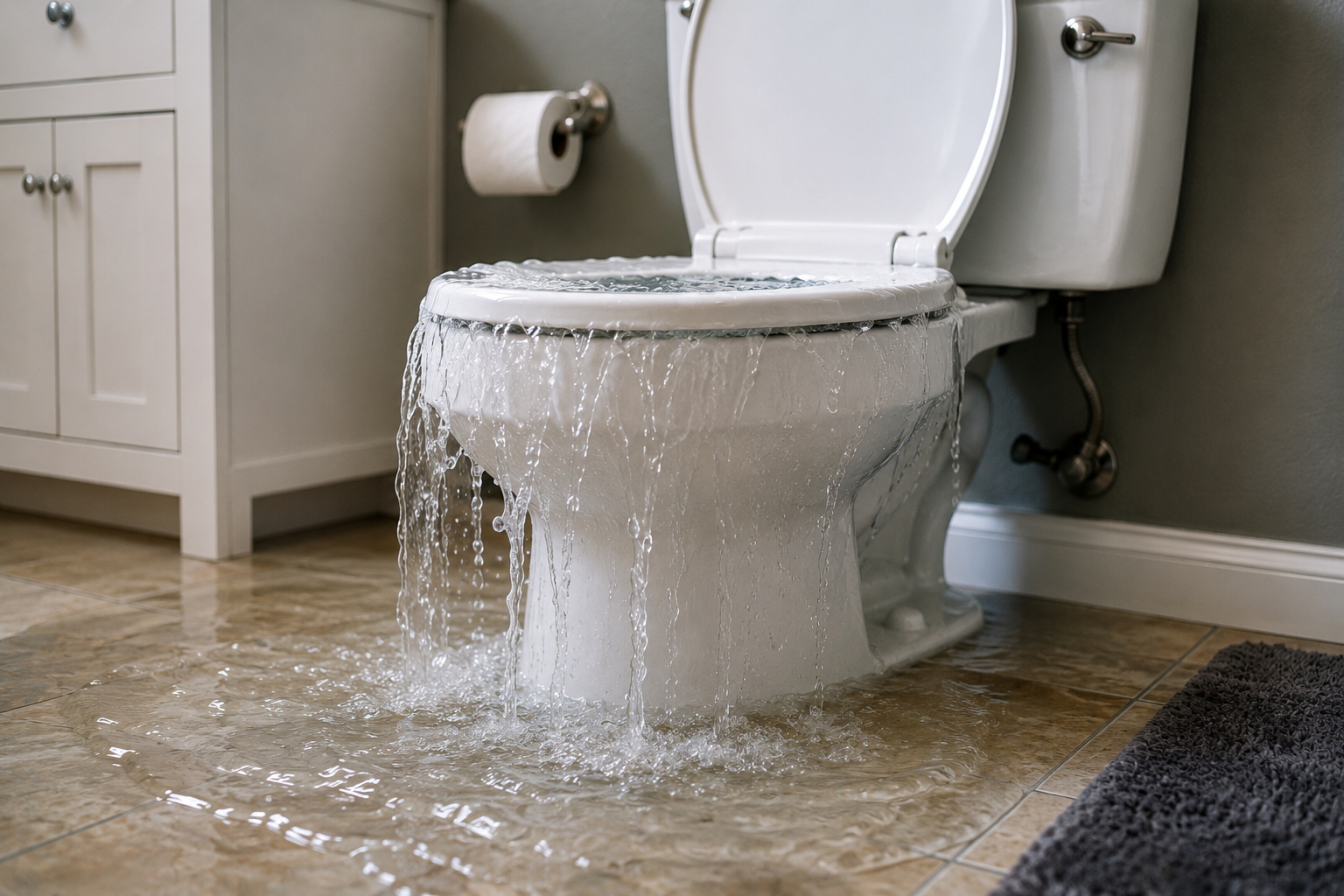
A toilet that overflows when nobody is using it can be alarming, especially when you cannot immediately see what is causing the problem. In many cases, the issue is connected to a clogged drain line, sewer blockage, faulty toilet components, or a problem elsewhere in the plumbing system. If you are dealing with repeated backups, professional drain cleaning services can help identify and clear the underlying blockage before it causes more water damage. AAA AUGER Plumbing Services handles clogged drains, backed-up toilets, sewer problems, and emergency plumbing issues for homes and businesses.
Why Would a Toilet Overflow When Nobody Is Using It?
A toilet does not necessarily need to be flushed for an overflow to occur. Your toilet is connected to a larger drainage and sewer system, so a blockage farther down the line can cause wastewater to move backward and rise through the toilet bowl.
Here are some of the most common reasons an unused toilet may overflow.
1. A Clogged Toilet Drain
A partial or complete blockage in the toilet trap or drainpipe can prevent wastewater from flowing away properly. The blockage may be caused by excessive toilet paper, non-flushable items, hair, or other materials that have entered the drainage system.
Sometimes the toilet continues working normally for a while before the obstruction becomes severe enough to cause an overflow.
A closet auger, a specialized plumbing tool designed for toilet stoppages, can be used to address blockages located in the toilet trap. AAA AUGER explains that a closet auger is designed specifically for toilet bowl stoppages.
2. A Main Sewer Line Blockage
If the toilet itself is not clogged, the problem could be farther down the main sewer line.
When the main drain becomes blocked, wastewater from different parts of the home has nowhere to go. Depending on the location and severity of the obstruction, water or sewage may back up through the lowest available fixture, which can include a toilet.
This is more likely when you notice several plumbing problems at the same time, such as:
-
Multiple slow drains
-
Toilets backing up
-
Gurgling sounds
-
Foul sewer odors
-
Water backing up into a bathtub or shower
-
Repeated toilet clogs
AAA AUGER notes that multiple clogged drains, gurgling, foul odors, and water backing up in unexpected places can indicate a more serious drainage or sewer problem.
3. A Clogged Sewer or Drain Line
A blockage does not always occur directly inside the toilet. Grease, mineral buildup, sewage, paper products, tree roots, and other debris can accumulate inside drainage or sewer pipes.
Over time, the buildup can restrict wastewater flow. When additional water enters the plumbing system from a sink, shower, washing machine, or another fixture, the restricted line may force water backward toward the toilet.
This is why an overflowing toilet can sometimes appear to have nothing to do with the toilet itself.
4. A Problem With the Toilet's Fill Valve
A faulty fill valve can allow too much water to enter the toilet tank. Normally, the fill valve shuts off when the tank reaches its proper water level.
If the valve malfunctions, water may continue entering the tank. In some situations, the excess water can flow through the overflow tube. While this is different from a drain blockage, it can still create the appearance that the toilet is overflowing.
If the water is rising inside the bowl rather than simply running continuously into the tank, however, a drainage problem is more likely.
5. A Faulty Flapper or Flush Valve
The flapper controls the release of water from the toilet tank into the bowl. If it becomes damaged, worn, or improperly seated, water can continue flowing.
A faulty flapper usually causes a running toilet rather than a bowl overflow, but continuous water flow can contribute to plumbing problems and higher water consumption.
If the toilet repeatedly runs even when nobody has flushed it, the internal components should be inspected.
6. A Blocked Vent Pipe
Your plumbing system relies on drain-waste-vent (DWV) pipes to move wastewater and maintain proper air pressure inside the drainage system.
If a plumbing vent becomes blocked by debris, leaves, or another obstruction, the drainage system may not function correctly. You might notice gurgling toilets, slow drains, unpleasant odors, or unusual water movement.
A vent problem can sometimes accompany a larger drainage issue, so repeated symptoms should not be ignored.
7. Tree Roots or Damaged Sewer Pipes
Older sewer lines can develop cracks, corrosion, collapsed sections, or other structural problems. Tree roots can also enter small cracks and grow inside the pipe, restricting wastewater flow.
AAA AUGER's plumbing information notes that damaged or corroded pipes can contribute to drainage problems and that video inspection equipment can help locate defects inside sewer and drain lines.
If your toilet repeatedly overflows despite attempts to clear it, the issue may require more than a basic toilet unclogging.
What Should You Do When an Unused Toilet Starts Overflowing?
The first priority is to prevent additional water from entering the toilet.
If the toilet has a shutoff valve near its base, turn it clockwise to stop the water supply. Avoid repeatedly flushing the toilet because doing so can make an existing blockage or overflow worse.
Next, check whether other drains or plumbing fixtures are experiencing problems. If the toilet is overflowing while other drains are also slow or backing up, the issue may involve a larger drain or sewer blockage.
Avoid using chemical drain cleaners as a quick solution, particularly when you suspect a major blockage. A professional plumber can determine whether the problem is located inside the toilet, the branch drain, or the main sewer line.
When Does an Overflowing Toilet Become an Emergency?
A toilet overflow should be treated seriously when wastewater is spilling onto the floor, multiple fixtures are backing up, or sewage is involved.
Contaminated wastewater can create sanitation concerns and may damage flooring, walls, cabinets, and other materials if it is allowed to spread.
AAA AUGER provides emergency plumbing and drain cleaning services and notes that clogged drains can lead to backups, overflows, and property damage.
If you cannot stop the overflow or the problem keeps returning, professional assistance can help identify the actual cause instead of repeatedly treating the symptom.
How Can Professional Drain Cleaning Help?
Professional drain cleaning addresses blockages that may be difficult to remove with a household plunger. Depending on the problem, plumbers may use specialized equipment such as drain augers, hydro-jetting equipment, or sewer camera inspections.
AAA AUGER explains that video inspection can allow technicians to visually examine the inside of a drainage system and pinpoint defects with electronic locating equipment.
This approach can be particularly useful when an overflowing toilet is caused by a blockage deeper in the plumbing system.
Preventing Future Toilet Overflows
You can reduce the risk of future toilet backups by following a few basic habits:
-
Flush only toilet paper and human waste.
-
Keep wipes, paper towels, and other non-flushable items out of the toilet.
-
Address slow drains before they become complete blockages.
-
Pay attention to gurgling sounds and foul odors.
-
Have recurring clogs professionally inspected.
-
Avoid ignoring repeated toilet backups.
-
Consider professional drain maintenance if your property has recurring drainage problems.
A toilet that overflows without being used is often a warning that something deeper in the plumbing system needs attention. Finding the cause early can help prevent sewage backups, water damage, and more expensive repairs.
Frequently Asked Questions
1. Why does my toilet overflow when nobody flushes it?
A clogged toilet drain, blocked sewer line, drainage backup, faulty plumbing component, or vent problem can cause an unused toilet to overflow. If other drains are also backing up, the issue may be farther down the main drain or sewer line.
2. Can a sewer blockage cause a toilet to overflow?
Yes. A blockage in the main sewer or drain line can prevent wastewater from leaving the home. As water continues entering the system, it may back up through a toilet, bathtub, or other low-level fixture.
3. What should I do if my toilet starts overflowing?
Stop using the toilet and turn off its water supply if possible. Avoid flushing again and check whether other drains are backing up. If the overflow continues or involves sewage, contact a professional plumber promptly.
4. Why does my toilet gurgle before it overflows?
Gurgling can occur when air becomes trapped because wastewater cannot move normally through a blocked drain line. AAA AUGER identifies toilet gurgling as a potential sign of a clogged drain.
5. When should I call a professional plumber for an overflowing toilet?
Call a professional when the toilet repeatedly overflows, multiple drains are affected, wastewater backs up into other fixtures, you notice sewage odors, or a basic plunging attempt does not solve the problem. Recurring problems can indicate a deeper drain or sewer line issue.

 English
 Arabic
 French
 Spanish
 Portuguese
 Deutsch
 Dutch
Dutch
 Italiano
 Russian
 Romaian
 Portuguese (Brazil)
 Greek
Greek