


What Should You Do After Being Injured in an 18-Wheeler Crash?
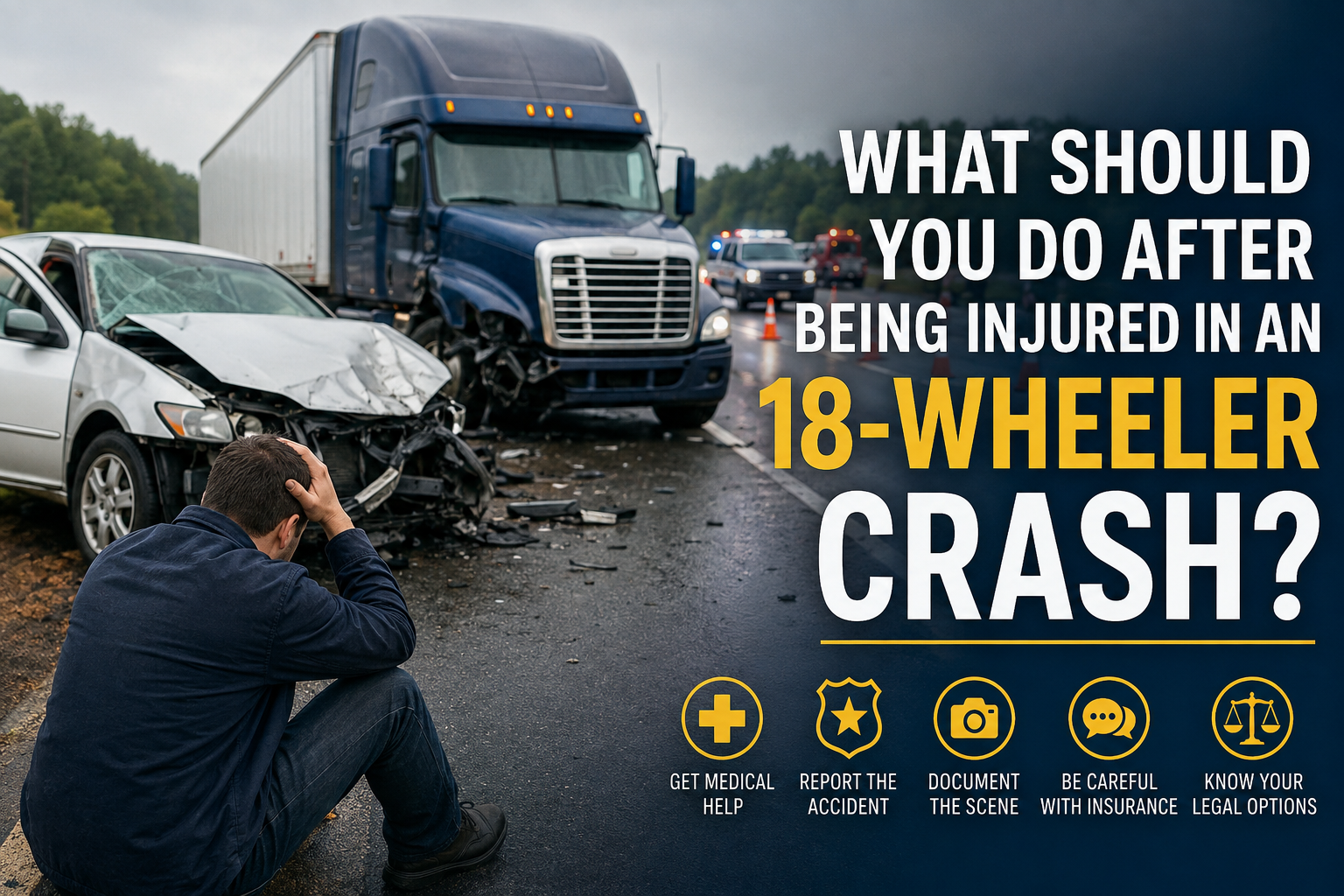
An 18-wheeler crash can leave you dealing with serious injuries, expensive medical treatment, vehicle damage, and uncertainty about what to do next. Unlike a typical car accident, a commercial truck crash may involve a truck driver, trucking company, insurance carrier, maintenance providers, cargo companies, and other parties. If you were injured in a Texas truck accident, an experienced 18-wheeler accident lawyer can help investigate what happened and protect your claim.
The steps you take immediately after an 18-wheeler accident can make an important difference. Your health should come first, but preserving evidence and understanding your legal options can also help protect your ability to seek compensation.
1. Get Medical Attention Immediately
Your first priority after an 18-wheeler crash should be your health and safety. If you or anyone else is seriously injured, call 911 and request emergency medical assistance.
Truck crashes can cause severe or catastrophic injuries because of the significant difference in size and weight between commercial trucks and passenger vehicles. Injuries may include:
-
Traumatic brain injuries
-
Spinal cord injuries
-
Broken bones
-
Internal injuries
-
Severe burns
-
Amputations
-
Neck and back injuries
-
Permanent disabilities
Even if you believe your injuries are minor, get evaluated by a medical professional. Some injuries may not produce noticeable symptoms immediately.
Keep copies of medical records, prescriptions, treatment recommendations, medical bills, and other documentation related to your recovery.
2. Report the 18-Wheeler Crash
Make sure the accident is reported to the appropriate authorities. A police or crash report can provide important information about the collision, including the vehicles involved, location, statements from drivers and witnesses, and the responding officer's observations.
When speaking with law enforcement, be truthful and provide the facts you know. Avoid guessing about details you cannot remember.
The accident report may later become an important piece of evidence when determining how the crash occurred and who may be responsible.
3. Document the Accident Scene
If your injuries and circumstances allow, document as much of the accident scene as possible.
Take photographs or videos of:
-
Damage to your vehicle
-
Damage to the 18-wheeler
-
Your visible injuries
-
Skid marks and debris
-
Road conditions
-
Traffic signs and signals
-
The truck's license plate and identifying information
-
Cargo or equipment involved in the crash
-
Nearby vehicles or property damage
Also write down what you remember about the collision as soon as possible. Details can become harder to recall with time.
If there are witnesses, obtain their names and contact information if you can do so safely.
4. Do Not Assume the Truck Driver Is the Only Responsible Party
One of the most important differences between a truck accident and an ordinary car crash is the number of potentially responsible parties.
The truck driver may be responsible if the collision resulted from speeding, distracted driving, fatigue, impairment, or another form of negligence. However, responsibility may also involve the trucking company or other entities.
An investigation may need to examine:
-
Driver qualifications and training
-
Driver hours and fatigue
-
Truck maintenance records
-
Brake and tire conditions
-
Electronic logging device information
-
Vehicle inspection records
-
Cargo loading and securement
-
Company safety policies
-
Driver communications
-
Black box or event data recorder information
The firm's experience with trucking cases reflects why a detailed investigation matters. Its attorneys have specifically discussed maintenance failures, defective equipment, cargo securement, and disappearing evidence in truck accident cases.
5. Be Careful When Speaking With Insurance Companies
After an 18-wheeler crash, you may hear from insurance representatives quickly. Remember that the insurance company's interests may not be the same as yours.
An adjuster may ask questions about:
-
How the accident happened
-
Your injuries
-
Your medical treatment
-
Whether you have had similar injuries before
-
How much you believe your claim is worth
Do not minimize your injuries or speculate about facts you do not know. Be cautious about providing a recorded statement or signing documents before you understand what you are agreeing to.
If an insurance company pressures you to accept a quick settlement, consider speaking with a qualified truck accident attorney first. A settlement should account for the full impact of your injuries and losses, not simply the immediate expenses you have already incurred.
6. Preserve Important Evidence
Evidence can be critical in an 18-wheeler accident claim. Unfortunately, some evidence may become difficult to obtain as time passes.
Potential evidence can include:
-
Police and crash reports
-
Photographs and videos
-
Medical records
-
Witness statements
-
Truck inspection records
-
Maintenance records
-
Driver logs
-
Electronic logging device data
-
Black box data
-
Employment and training records
-
Cellphone records when legally obtainable
-
Cargo and loading documentation
-
Surveillance or traffic-camera footage
The trucking company and its insurers may begin investigating the collision soon after it happens. Harrison Davis Morrison Jones emphasizes that evidence can disappear and witnesses can become difficult to locate, making early investigation particularly important.
7. Keep Records of Your Financial Losses
An 18-wheeler accident can affect much more than your immediate medical expenses.
Depending on the circumstances, damages may involve:
-
Medical expenses
-
Future medical care
-
Lost wages
-
Reduced earning capacity
-
Property damage
-
Rehabilitation costs
-
Physical pain
-
Emotional suffering
-
Long-term disability
Keep receipts, invoices, pay records, medical bills, and documentation showing how the injury has affected your ability to work and carry out normal activities.
The more organized your records are, the easier it can be to understand the financial impact of the accident.
8. Speak With an Experienced Truck Accident Attorney
Large commercial trucking cases can involve complex evidence, multiple potentially responsible parties, and aggressive insurance companies. An attorney experienced in truck accident litigation can investigate the crash, identify potentially responsible parties, preserve evidence, communicate with insurers, and evaluate the losses associated with your injuries.
Harrison Davis Morrison Jones identifies trucking accidents as one of its practice areas and emphasizes its trial experience in complex injury cases. The firm also offers free consultations and states that it handles most lawsuits on a no-recovery, no-fee basis.
How Long Do You Have to File an 18-Wheeler Accident Claim in Texas?
Texas law imposes deadlines for personal injury lawsuits, and the applicable deadline can depend on the circumstances and parties involved. Waiting too long can also make it harder to preserve important evidence.
Because every truck accident is different, it is important to discuss your situation with an attorney as soon as reasonably possible. An attorney can evaluate the applicable deadlines and determine what steps should be taken to preserve your claim.
What Should You Do After an 18-Wheeler Crash?
After an 18-wheeler crash, focus first on getting medical care and reaching a safe location. Report the accident, document the scene when possible, preserve your records, and be cautious when communicating with insurance companies.
Most importantly, do not assume that the circumstances are as simple as a driver-versus-driver accident. Commercial truck crashes may require a detailed investigation into the driver, trucking company, vehicle maintenance, cargo, and other contributing factors.
If you or a loved one has suffered serious injuries in an 18-wheeler crash, speaking with an experienced Texas trial lawyer can help you understand your legal options and determine what steps may be appropriate for your situation.
Frequently Asked Questions
1. What should I do immediately after an 18-wheeler accident?
Get to a safe location if possible, call 911, seek medical attention, report the crash, and document the accident scene. Keep records of your treatment and other losses, and consider speaking with an experienced truck accident attorney.
2. Can I still have a claim if I was partially at fault?
Potentially. Whether you can recover damages may depend on the specific facts of the collision and how responsibility is allocated under applicable Texas law. An attorney can evaluate the circumstances of your accident.
3. What evidence is important in an 18-wheeler accident case?
Evidence may include photographs, videos, police reports, medical records, witness statements, truck maintenance records, driver logs, electronic logging data, vehicle data, cargo records, and other information related to the crash.
4. Should I accept an insurance settlement after a truck accident?
Do not feel pressured to accept a settlement before understanding the full extent of your injuries and losses. A quick settlement may not account for future medical treatment, lost earning capacity, or other damages.
5. When should I contact an 18-wheeler accident lawyer?
It is generally wise to speak with an attorney as soon as possible after a serious truck accident. Early legal involvement can help with evidence preservation, investigation, insurance communications, and applicable filing deadlines.

 Arabic
 French
 Spanish
 Portuguese
 Deutsch
 Turkish
 Dutch
Dutch
 Italiano
 Russian
 Romaian
 Portuguese (Brazil)
 Greek
Greek
