How Is an 18-Wheeler Accident Case Different From a Car Accident Case?
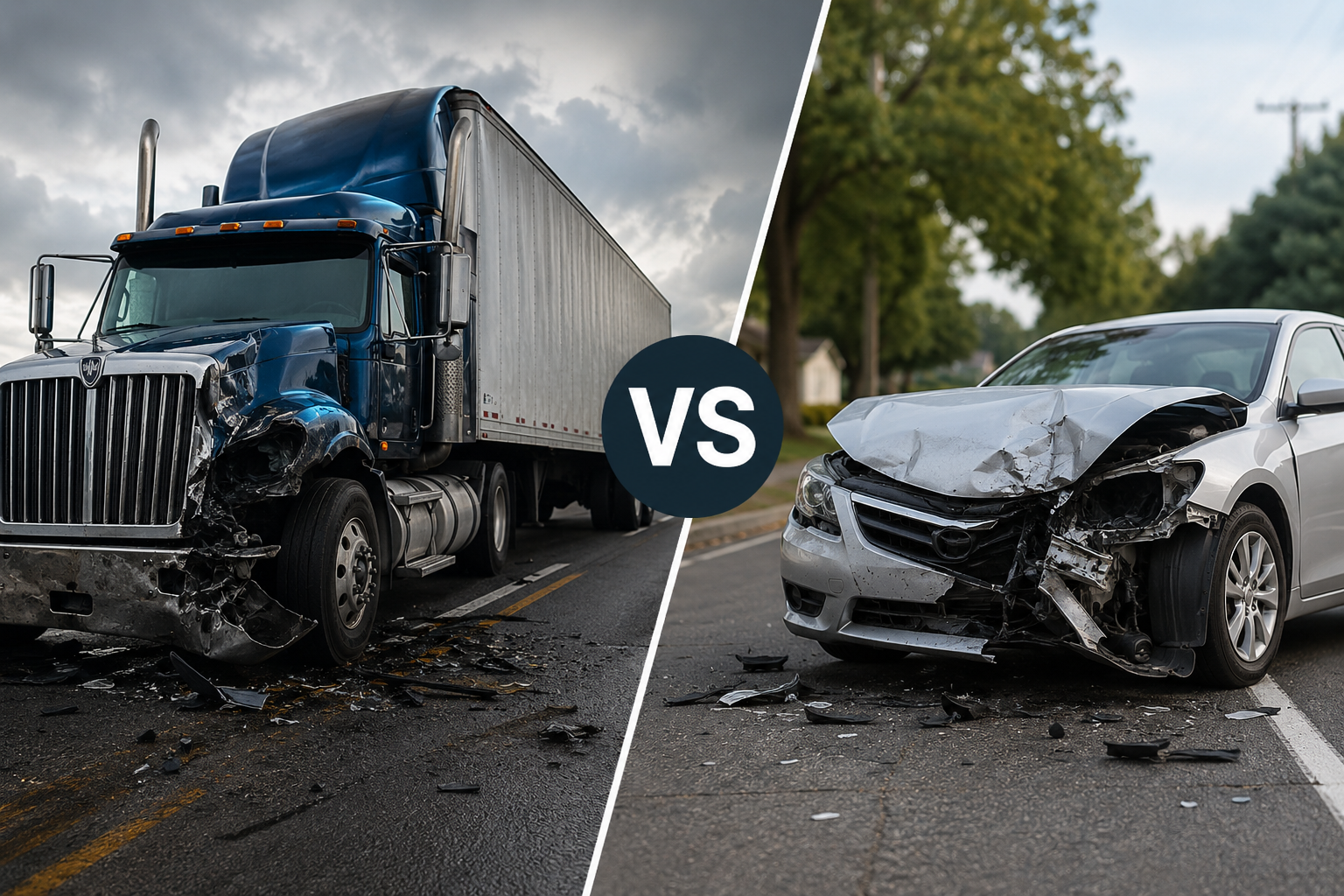
An 18-wheeler accident case can be far more complicated than a typical car accident claim. Although both types of crashes can result in serious injuries, commercial truck accidents often involve federal and state trucking regulations, multiple potentially liable parties, extensive evidence, and insurance policies with much higher limits. If you have been injured in a serious truck crash, speaking with an experienced 18-wheeler accident lawyer can help you understand your legal options.
Why Are 18-Wheeler Accident Cases More Complicated?
A standard car accident may involve two drivers, their insurance companies, and relatively straightforward evidence. An 18-wheeler crash can involve the truck driver, trucking company, truck owner, maintenance provider, cargo loader, manufacturer, and other parties.
Commercial trucking operations are also subject to specific safety requirements. Federal Motor Carrier Safety Administration (FMCSA) regulations address issues such as driver qualifications, hours of service, vehicle inspections, maintenance, and cargo securement.
Because of these additional factors, investigating an 18-wheeler accident claim often requires more than determining which driver caused the collision.
Multiple Parties May Be Responsible
One of the biggest differences between a car crash and a commercial truck accident is the number of parties that may share responsibility.
Depending on the circumstances, an investigation may identify potential liability involving:
-
The truck driver
-
The trucking company
-
The truck owner
-
A vehicle maintenance company
-
A cargo loading company
-
A parts or equipment manufacturer
-
A freight or logistics company
-
Other negligent parties
For example, if a truck driver causes a crash because of fatigue, the investigation may need to determine whether the driver violated hours-of-service requirements or whether the trucking company encouraged unsafe driving practices.
Similarly, if defective brakes or poor maintenance contributed to the collision, another party may potentially be responsible.
Truck Accident Cases Require More Evidence
Evidence is important in every personal injury case, but 18-wheeler accident investigations can require extensive documentation.
Potential evidence may include:
-
Electronic logging device data
-
Driver logs
-
Vehicle inspection records
-
Maintenance records
-
Truck black box or event data
-
Driver qualification records
-
Employment records
-
Cargo and loading documentation
-
Company safety records
-
Dashcam or surveillance footage
-
Accident scene photographs
-
Witness statements
-
Police reports
Some evidence may be controlled by the trucking company or another third party. That makes prompt evidence preservation particularly important after a serious commercial truck crash.
Federal Trucking Regulations Can Matter
Another major difference is that commercial truck drivers and trucking companies may be subject to FMCSA regulations and other applicable transportation rules.
These regulations can address:
-
Hours of service
-
Driver qualifications
-
Drug and alcohol testing
-
Vehicle inspections
-
Maintenance
-
Cargo securement
-
Equipment requirements
-
Recordkeeping
If a violation contributed to an accident, it may become an important part of the investigation.
For example, a driver who operates an 18-wheeler while excessively fatigued may have slower reaction times and impaired judgment. If records show that the driver exceeded applicable driving limits, those records could help establish how the crash occurred.
The Injuries Can Be More Severe
The size and weight difference between a passenger vehicle and an 18-wheeler can make commercial truck crashes particularly dangerous.
Truck accidents can result in:
-
Traumatic brain injuries
-
Spinal cord injuries
-
Broken bones
-
Internal injuries
-
Severe burns
-
Amputations
-
Permanent disabilities
-
Disfigurement
-
Fatal injuries
A serious injury may require emergency treatment, surgery, rehabilitation, long-term care, or modifications to accommodate a permanent disability.
As a result, calculating damages in a serious truck accident claim may require consideration of both current and future losses.
Compensation May Involve Significant Damages
The damages available in an 18-wheeler accident case depend on the circumstances and applicable Texas law. Potential damages may include medical expenses, lost income, reduced earning capacity, physical pain, mental anguish, physical impairment, disfigurement, and other losses.
Future damages can be especially important when an injury permanently affects a person's ability to work or requires ongoing medical treatment.
In a wrongful death case, surviving family members may also have potential claims for qualifying losses resulting from the death.
Trucking Insurance Claims Can Be More Complex
Commercial trucking companies generally carry commercial insurance designed for business operations. The claims process can therefore involve commercial insurers, trucking companies, risk managers, and defense lawyers.
After a major crash, an insurer may quickly begin investigating liability and damages. An early settlement offer may not necessarily reflect the full long-term cost of a catastrophic injury.
Before accepting a settlement, an injured person should understand the extent of their medical needs, lost income, future expenses, and other potential damages.
Accident Reconstruction May Be Necessary
Another distinction is the complexity of reconstructing an 18-wheeler crash.
Depending on the accident, attorneys and investigators may examine:
-
Vehicle damage
-
Skid marks
-
Road conditions
-
Vehicle speeds
-
Electronic data
-
Driver actions
-
Visibility
-
Braking
-
Trailer movement
-
Cargo weight and placement
Accident reconstruction specialists may help determine how the collision happened and whether driver behavior, equipment failure, improper loading, or another factor contributed to the crash.
Why Legal Representation Can Matter
An 18-wheeler accident can involve evidence, regulations, insurance companies, and multiple potentially responsible parties that are not normally present in a straightforward car accident.
A lawyer handling a commercial truck accident claim may investigate the crash, identify potentially liable parties, preserve important evidence, communicate with insurers, and pursue compensation for qualifying losses.
For Texas victims dealing with catastrophic injuries or the loss of a loved one, understanding these differences can be an important first step toward protecting their legal rights.
FAQs About 18-Wheeler vs. Car Accident Cases
1. Is an 18-wheeler accident case harder than a car accident case?
It can be. Truck cases may involve multiple defendants, commercial insurance, federal trucking regulations, extensive records, and specialized accident investigations.
2. Who can be responsible for an 18-wheeler accident?
Depending on the facts, potential responsible parties may include the truck driver, trucking company, truck owner, maintenance provider, cargo loader, manufacturer, or other parties.
3. What evidence is important in an 18-wheeler accident case?
Important evidence may include driver logs, electronic data, maintenance records, inspection reports, cargo records, photographs, video footage, witness statements, and accident reconstruction evidence.
4. Are truck accident injuries usually more serious than car accident injuries?
They can be, because of the significant difference in size and weight between commercial trucks and passenger vehicles. Serious crashes can result in catastrophic or fatal injuries.
5. Should I talk to a lawyer after an 18-wheeler accident?
If you suffered significant injuries, face substantial financial losses, or believe multiple parties may be responsible, consulting a truck accident attorney can help you understand your legal options.

 Arabic
 French
 Spanish
 Portuguese
 Deutsch
 Turkish
 Dutch
Dutch
 Italiano
 Russian
 Romaian
 Portuguese (Brazil)
 Greek
Greek