


GPT-INDIA Bag Filter: Improving Industrial Dust Control and Reducing Filtration Costs
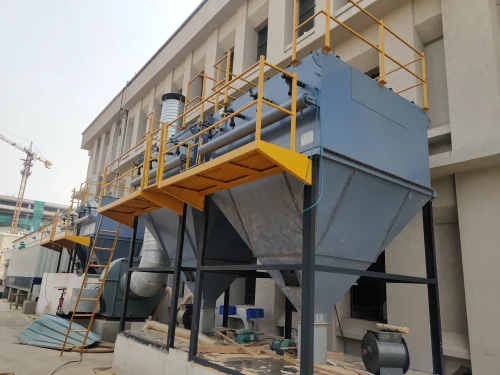
Industrial dust filtration is an important part of maintaining a controlled and productive manufacturing environment. Dust generated during grinding, crushing, conveying, mixing, polishing, cutting, and powder processing can spread quickly if it is not captured at the source. Over time, airborne particles can accumulate on machinery, increase cleaning requirements, affect product quality, and contribute to unnecessary maintenance.
A properly engineered Bag Filter can address these challenges by continuously separating particulate matter from industrial air streams. However, the actual performance of a filtration system depends on several connected factors, including airflow, filter media, dust loading, cleaning frequency, fan capacity, and maintenance practices.
GPT-INDIA designs industrial filtration and air pollution control solutions according to the operating requirements of different manufacturing processes.
Understanding Bag Filter Technology
A Bag Filter uses fabric filter elements to remove particulate matter from contaminated air. Dust-laden air enters the filtration chamber and passes through the filter media.
The fabric retains particulate matter while cleaner air moves through the bags. As dust accumulates on the surface, the filtration layer develops and pressure resistance gradually increases.
The collected dust must then be removed through an appropriate cleaning mechanism. Depending on the equipment configuration, this may involve pulse jet cleaning, mechanical shaking, reverse air, or another suitable method.
The objective is to maintain effective particle capture while keeping airflow resistance within an acceptable operating range.
How a Pulse Jet Bag Filter Maintains Continuous Operation
A Pulse Jet Bag Filter uses compressed air to automatically clean the Filter Bags.
During normal filtration, dust accumulates on the surface of the bags. When the cleaning cycle is activated, a short burst of compressed air is directed into a selected row of bags.
The pressure wave causes the bags to flex and releases accumulated dust. The dust falls into the hopper while the remaining bags continue filtering.
This arrangement reduces the need for regular manual cleaning and can support continuous operation in plants where production downtime needs to be minimised.
The Connection Between Filtration and Energy Consumption
Energy consumption is an important consideration when evaluating industrial dust collection.
As dust accumulates on Filter Bags, airflow resistance can increase. If pressure drop becomes excessive, the fan may need to work harder to maintain the required airflow.
At the same time, cleaning the bags too frequently can increase compressed-air consumption and subject the filter media to unnecessary mechanical stress.
A properly configured Pulse Jet Bag Filter seeks to balance these two factors. Differential-pressure-based cleaning can help activate the cleaning cycle when required rather than relying entirely on unnecessary fixed-time cleaning.
Why Filter Bags Affect Total Cost
Filter Bags are consumable components, but their impact extends beyond replacement cost.
The correct filter media can help maintain suitable pressure drop, effective dust release, and stable airflow. Incorrect media may result in premature wear, blinding, chemical degradation, or excessive pressure resistance.
A low-cost bag may therefore become expensive if it requires frequent replacement or increases system energy consumption.
For this reason, Filter Bags should be selected based on total operating conditions rather than purchase price alone.
Selecting the Right Filter Media
The correct filter media depends on the application.
Temperature is a major consideration, particularly in hot process exhaust applications. Dust composition is also important because abrasive, sticky, oily, hygroscopic, and chemically aggressive particles can affect filter performance differently.
Moisture content, particle size, filtration velocity, gas composition, and pulse-cleaning intensity should also be considered.
Common industrial filter media include polyester, polypropylene, acrylic, aramid, PTFE, and fibreglass-based materials. Special finishes may be used for applications requiring particular surface properties.
Working With Experienced Bag Filter Manufacturers
When selecting Bag Filter manufacturers, industries should evaluate their engineering capability in addition to fabrication quality.
A complete collector requires appropriate filtration area, inlet design, airflow distribution, hopper geometry, cleaning arrangement, access points, and dust discharge.
The equipment must also be compatible with the existing extraction network and fan.
Experienced manufacturers can evaluate the process and develop equipment around actual dust loading, airflow, temperature, and operating requirements.
GPT-INDIA develops customised industrial filtration systems for different manufacturing applications.
Choosing Dependable Bag Filter Suppliers
Reliable Bag Filter suppliers can provide value throughout the equipment's operating life.
For new projects, suppliers should be able to coordinate equipment specifications with ductwork, fans, production machinery, and dust handling.
For existing systems, technical understanding becomes equally important. Increasing pressure drop or poor dust collection may not always mean that the collector needs replacement. The problem could involve damaged bags, inadequate airflow, poor pulse cleaning, duct leakage, or incorrect operating conditions.
A technically capable supplier can help identify the actual cause before recommending equipment changes.
Role of Filter Bags Manufacturers
The quality of Filter Bags depends on both the selected fabric and manufacturing process.
Dimensions, stitching, sealing, attachment arrangements, fabric permeability, and surface treatment all contribute to proper installation and performance.
Filter Bags manufacturers should therefore produce bags according to the actual collector configuration and process conditions.
Replacement bags should not be selected purely by size. The fabric specification and operating conditions should also match the original application.
Selecting Reliable Filter Bags Suppliers
A dependable Filter Bags supplier should be able to provide replacement media that meet the required specifications.
Before ordering, customers should verify bag dimensions, fabric type, operating temperature, permeability, construction details, and attachment method.
Consistent replacement quality helps maintain predictable filtration performance and reduces the risk of installing incompatible media.
Applications Across Manufacturing Industries
Bag filtration technology is used in numerous industrial sectors.
Cement and mineral plants use filtration for process dust and material handling. Foundries and metalworking facilities may require dust collection for grinding, casting, polishing, and related operations.
Food processing plants can use Bag Filters for powders such as flour, starch, sugar, and spices. Pharmaceutical and chemical industries may require specialised filtration media for fine powders.
Woodworking, ceramics, plastics, recycling, engineering, biomass, and battery-related manufacturing operations can also use customised fabric filtration systems.
Maintenance Practices for Better Bag Filter Performance
Preventive maintenance is essential for maintaining filtration performance.
Operators should regularly monitor differential pressure and investigate unusual changes. Filter Bags should be inspected for holes, wear, blinding, or abnormal dust accumulation.
The pulse-cleaning system should also be checked. Faulty pulse valves, inadequate compressed-air pressure, moisture in the air supply, or damaged components can reduce cleaning effectiveness.
The hopper and dust discharge arrangement should remain operational so collected material does not accumulate excessively inside the collector.
These basic practices can help reduce unexpected downtime and extend the useful life of filtration components.
GPT-INDIA Industrial Filtration Solutions
GPT-INDIA designs and manufactures customised industrial air pollution control equipment for diverse manufacturing applications. The company's approach considers the complete filtration system, including source capture, airflow, filtration, cleaning, dust discharge, and maintenance.
Its product range includes Bag Filters, Pulse Jet Bag Filters, Filter Bags, Dust Collectors, Cyclone Dust Collectors, Multicyclone Dust Collectors, Wood Dust Collectors, Portable Dust Collectors, BIBO Dust Collectors, Wet Scrubbers, Activated Carbon Filters, Fume Exhaust Systems, Paint Booths, Water Curtain Paint Booths, Air Washer Systems, Rotary Air Locks, Axial Flow Fans, and Centrifugal Blowers.
GPT-INDIA operates manufacturing units in New Delhi and Sahibabad and supplies industrial air pollution control solutions across India and international markets.
GPT-INDIA
59/2/1, Site 4, Industrial Area, Sahibabad, Distt. Ghaziabad – 201010, Uttar Pradesh, India
Phone: +91-9773500660
Email: info@gpt-india.com
Website: gptindia.in
Frequently Asked Questions
What is a Bag Filter?
A Bag Filter is an industrial filtration system that uses fabric filter elements to remove particulate matter from contaminated air.
What makes a Pulse Jet Bag Filter suitable for continuous operation?
Its compressed-air cleaning mechanism allows Filter Bags to be cleaned automatically while the filtration process continues.
How can Filter Bags affect operating costs?
Suitable Filter Bags can help maintain airflow, pressure drop, cleaning performance, and service life. Incorrect media may increase maintenance and energy costs.
How should Bag Filter manufacturers be selected?
Consider engineering experience, manufacturing quality, customisation capability, technical support, replacement availability, and experience with similar applications.
What should be checked before purchasing replacement Filter Bags?
Verify the dimensions, fabric material, operating temperature, permeability, surface treatment, attachment arrangement, and compatibility with the existing collector.
Conclusion
A Bag Filter is more than a dust collection housing; it is part of an integrated filtration system where airflow, filter media, cleaning, dust discharge, and maintenance all influence performance.
A Pulse Jet Bag Filter can provide automatic cleaning for continuous applications, while properly selected Filter Bags can help maintain stable filtration and reduce avoidable operating costs.
For industries evaluating Bag Filter suppliers, Bag Filter manufacturers, Filter Bags suppliers, or Filter Bags manufacturers, technical capability and application knowledge should be considered alongside equipment pricing. GPT-INDIA provides customised industrial filtration solutions designed around real process conditions and long-term operating requirements.
 Italiano
 English
 Arabic
 French
 Spanish
 Portuguese
 Deutsch
 Turkish
 Dutch
Dutch
 Russian
 Romaian
 Portuguese (Brazil)
 Greek
Greek